Cold Process Soap Problems (and How to Fix Them)
If your batch seized in the pot, developed a grainy texture, or grew orange spots weeks after unmolding, the cause is almost always identifiable. Cold process soap is a precise chemical reaction between lye and oils, and small shifts in temperature, timing, or fragrance chemistry are what push a batch off course. Once you know what happened, the fix is easy to identify.
This guide covers seizing, acceleration, ricing, soda ash, DOS (orange spots), glycerin rivers, overheating and cracking, false trace, and separation. Find the problem that matches your batch or read through for a working reference you can return to every time you run into issues. None of these outcomes mean the recipe itself failed. Most track back to one variable that shifted during the pour and adjusting that single variable is usually enough to fix it on the next attempt.
Nearly every issue on this list comes back to one of three root causes: a temperature imbalance between the lye solution and oils, a fragrance oil behaving differently than expected, or a measurement that was slightly off. Knowing which bucket a problem falls into makes the fix faster to find and easier to prevent next time.
Seizing
Cause: Seizing is when the batter hardens abruptly in the pot, often mid-stir and well before you finish adding colorants or layers. It is triggered by a fragrance or essential oil reacting with the lye solution, a batch that is too cold when combined, or too much accelerating additive added at once.
Fix: Move fast. Get the batter into the mold before it sets further, pressing it in firmly with a spatula and tapping the mold to release air pockets. Seized soap still saponifies and cures normally. It will simply look more rustic than smooth, which is easy to work around with a textured top, a rustic hand-cut bar, or a full rebatch if the texture bothers you.
Prevent it: Test new fragrance oils in a small batch first, keep oils and lye solution within a similar temperature range before combining, and add fragrance at a thin trace so you have time to work before it sets.
Acceleration
Cause: Acceleration is a lighter version of seizing. Trace arrives faster than planned, cutting the working window short without hardening the batter outright. The usual causes are a fast-moving fragrance oil, a high fragrance load, or a batter that runs warm when the fragrance goes in.
Fix: Switch to hand stirring the moment trace speeds up, and pour earlier than you intended instead of waiting for a design to come together. For swirls or layered pours, simplify the plan on the spot. A batter moving this fast will not wait for anything more elaborate.
Prevent it: Know how a fragrance oil behaves in cold process before relying on it in a batch that matters. WSP tracks which fragrance oils tend to accelerate or discolor in cold process, so you can plan the pour, and the design, around them instead of being surprised mid-batch. See our guide to fast fragrances for the full list.
Ricing
Cause: Ricing shows up as small, grainy lumps that look like rice floating in soup. It happens when a fragrance oil reacts with the lye solution and partially solidifies before it fully disperses through the batter.
Fix: Keep stick blending. Most riced batter smooths out within another minute or two of steady blending. If lumps remain, strain the batter through a mesh sieve before pouring so the finished bars stay smooth.
Prevent it: Add fragrance at a light trace and blend it in immediately and thoroughly. Stirring it in slowly by hand gives it time to react before it has fully dispersed. A small trial batch tells you whether a fragrance oil is prone to ricing before you commit a full batch of oils, colorants, and time to it.
Soda ash
Cause: Soda ash is the powdery white film that sometimes forms on the surface of cured soap. It is a surface reaction between residual lye near the top of the bar and carbon dioxide in the air, not a sign of a failed batch or an unsafe bar.
Fix: Spray the surface with rubbing alcohol shortly after unmolding, or steam it lightly with a handheld garment steamer. Both remove ash quickly without disturbing color, embeds, or design work underneath.
Prevent it: Cover the mold right after pouring, keep the room around 70 to 75 degrees Fahrenheit during gel, and limit drafts for the first 24 hours, when the surface is most exposed to air and most likely to ash.
DOS (orange spots)
Cause: Dreaded Orange Spots, known as DOS, are small orange or brown blemishes that appear weeks or months after a bar is made. They come from rancidity in the oils, usually an oil that was already aging when it went into the batch, or a superfat level set higher than the recipe needed.
Fix: There is no fix once DOS appears. Set affected bars aside and do not sell them. Unaffected bars from the same batch remain usable, since DOS develops unevenly across a cure.
Prevent it: Buy oils in quantities you will use within their shelf life, store them away from heat and light, and keep superfat modest instead of generous. A small amount of an antioxidant such as rosemary oleoresin extract meaningfully extends shelf life in oils prone to rancidity, particularly softer oils high in unsaturated fat, and is worth adding to any recipe you expect to sit on a shelf for months before it sells.
Glycerin rivers
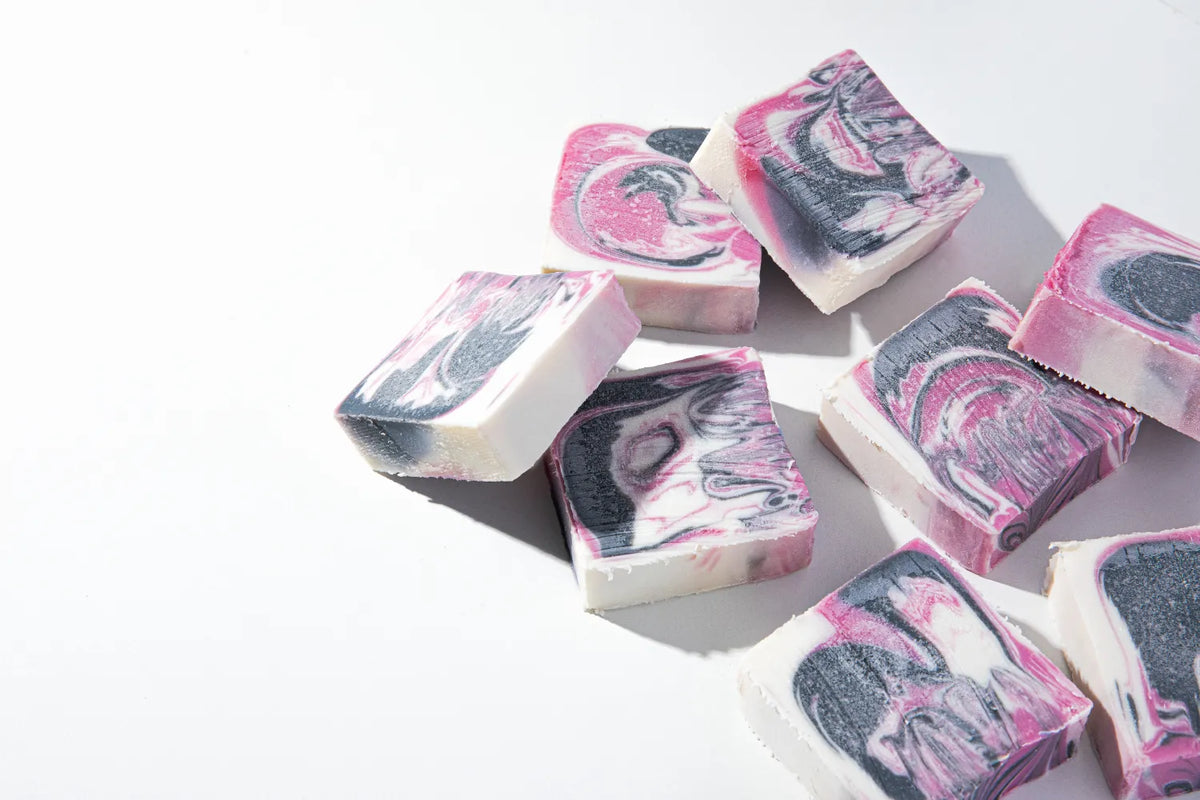
Cause: Glycerin rivers are translucent, wavy streaks running through an otherwise opaque bar. They form when the batch runs slightly hot during gel phase, separating pockets of glycerin visually from the rest of the soap as it sets.
Fix: Glycerin rivers are cosmetic. The bar performs the same and is fully safe to use and sell, though some Makers prefer a cleaner, more uniform look for photography or retail display.
Prevent it: Insulate more lightly, especially with fragrance loads or additives known to generate heat on their own, and keep the mold somewhere cooler during gel so heat spreads evenly through the batch instead of building in pockets.
Overheating, cracking, and volcano
Cause: A batch that overheats during gel can crack down the middle, dome upward, or push molten soap over the top of the mold entirely, a reaction soapers call a volcano. Heat builds from heavy insulation, fragrance oils that react exothermically, sugar-based additives like milk or honey, and large batch sizes that hold heat longer than small ones.
Fix: If you catch it early, remove insulation immediately and move the mold somewhere cooler, or place it in the refrigerator to stop the temperature climb before it goes further. A cracked top can be leveled after cure or covered with a topcoat once the bars are fully hardened.
Prevent it: Reduce insulation for batches with milk, honey, or sugar, keep pour temperatures on the lower end of the usual range, and use smaller or shallower molds for recipes you already know tend to run hot. A quick check with an infrared thermometer partway through gel tells you whether a batch is climbing faster than usual, in time to intervene.
False trace
Cause: False trace looks like true trace, a thickened batter, but comes from hard butters or waxes solidifying as the batter cools, not from saponification progressing. It shows up most with cocoa butter, stearic acid, or beeswax in the recipe.
Fix: Keep blending. If the thickening came from cooling and not actual trace, continued blending and gentle warming loosens the batter back to a pourable stage within a few minutes.
Prevent it: Melt hard oils and butters fully before combining, work with a slightly warmer batter when they are part of the recipe, and blend in short bursts so you can tell true trace from a temperature-driven thickening before you stop too early or too late.
Separation and oil pooling
Cause: Separation appears as a layer of liquid oil sitting on top of or pooling within the soap, usually because the batter was not blended long enough to fully emulsify, or the lye solution and oils were combined at very different temperatures.
Fix: Caught within the first day, you can often scoop the batter back into the pot, warm it gently, and stick blend to a full, stable trace before repouring into the mold. Once a bar hardens fully around a separated layer, it typically cannot be corrected and should be rebatched or discarded.
Prevent it: Blend to a full, stable trace before pouring rather than stopping at the first sign of thickening, and keep the lye solution and oils within about 10 degrees Fahrenheit of each other before combining.
Prevent Problems Before They Start
Most of the issues above share the same root causes: temperature swings, untested fragrance, and imprecise measuring. A handful of habits address all three at once and cut down on wasted batches, with whichever recipe you’re using.
-
Run every recipe, and every recipe change, through a lye calculator so ratios stay accurate and superfat lands where you intended.
-
Keep oils and lye solution within a similar temperature range before combining. A thermometer beats guessing by feel.
-
Test new fragrance oils in a small batch before committing a full one, and note how each one performs for next time.
-
Buy and store oils fresh, and rotate stock so older oils get used before they age past their useful life.
-
Weigh every ingredient instead of measuring by volume. Cold process rewards precision, and a scale removes the guesswork behind most of the problems above.
Getting the basics locked in before you troubleshoot pays off. Our guide to cold process fundamentals covers the full process from measuring to unmolding, and is worth a read even for Makers with a few batches behind them.
FAQ
Can I save seized soap?
Usually, yes. Work quickly and press the thickened batter into the mold before it sets further, tapping out air pockets as you go. It will look more rustic than smooth, but it saponifies and cures normally. If it seizes before you can pour at all, scoop it directly into the mold rather than trying to smooth it in the pot.
Is soda ash harmful?
No. Soda ash is a surface reaction between residual lye and air, not a defect in the soap or a safety issue. It does not affect how the bar cleans, lathers, or performs on skin. Wipe it with rubbing alcohol or steam it off for a cleaner finish, particularly on bars headed for retail shelves where appearance matters most.
What causes orange spots?
Orange spots, known as DOS, come from rancid oils, usually an oil that was already aging before the batch was made, or a superfat level set higher than the recipe needed. Fresh oils, proper cool and dark storage, and a modest superfat are the most reliable ways to prevent DOS from developing during cure.
Why did my soap crack down the middle?
Cracking happens when the batch overheats during gel phase, usually from heavy insulation, fragrance oils that generate their own heat, or additives like milk and honey that raise the internal temperature further. Reduce insulation, lower your pour temperature, and use a shallower mold for recipes prone to running hot.
Shop Supplies That Keep a Batch on Track
Reliable soap starts with reliable inputs. Shop fresh base oils and sodium lactate, built for harder, longer-lasting bars, and run every recipe through WSP's lye calculator before you pour. A dependable stick blender matters too, since a full, even trace prevents more of the problems above than any single ingredient can.