Cocoa Butter vs Shea Butter for Soap
Cocoa butter builds a hard, long-lasting bar. Shea butter builds a softer, more conditioning one. Many soap makers use both, at different rates, for different results. Neither butter fixes every problem in a formula, so knowing where to use each one saves time at the mixing bowl and money in the ingredient budget. This guide compares hardness, skin feel, lather, and usage rates, so you know which butter, or blend, fits your recipe.
For a maker building a soap line, the choice is not only about skin feel. It affects unmolding time, shelf stability, cost per bar, and how a batch performs from one production run to the next.
Cocoa Butter in Soap
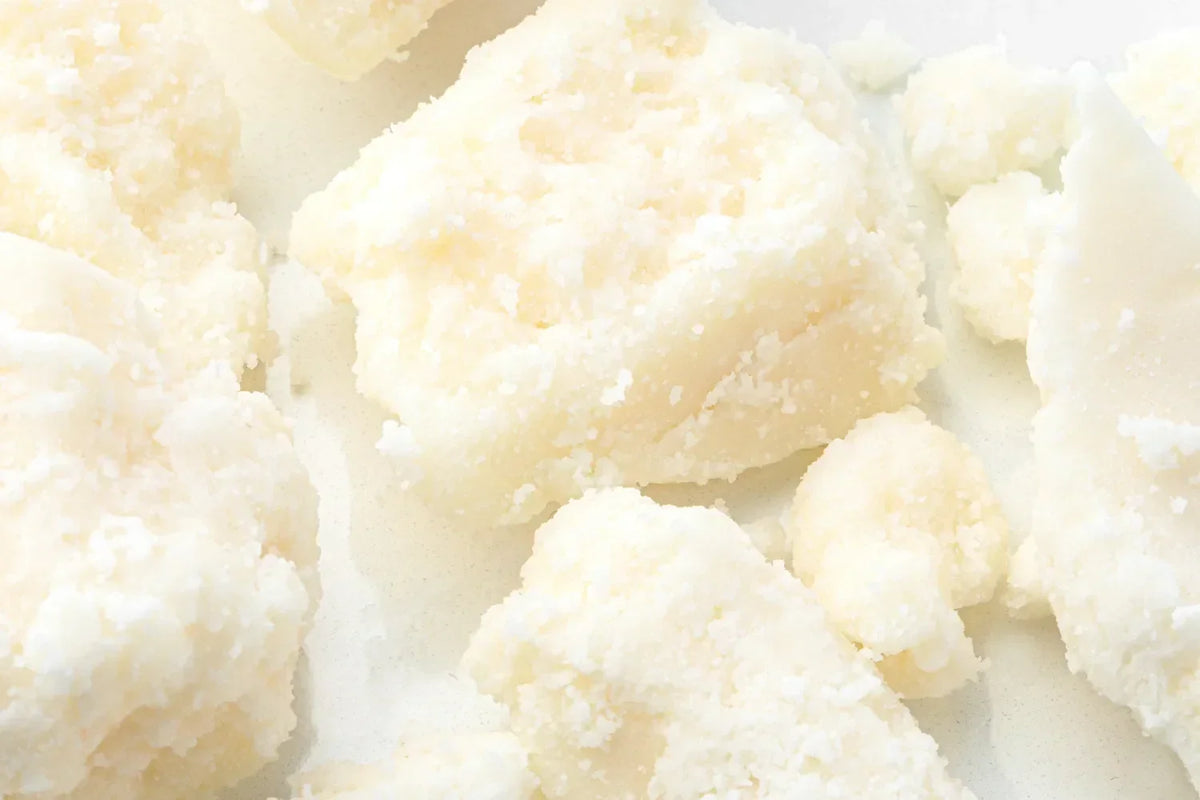
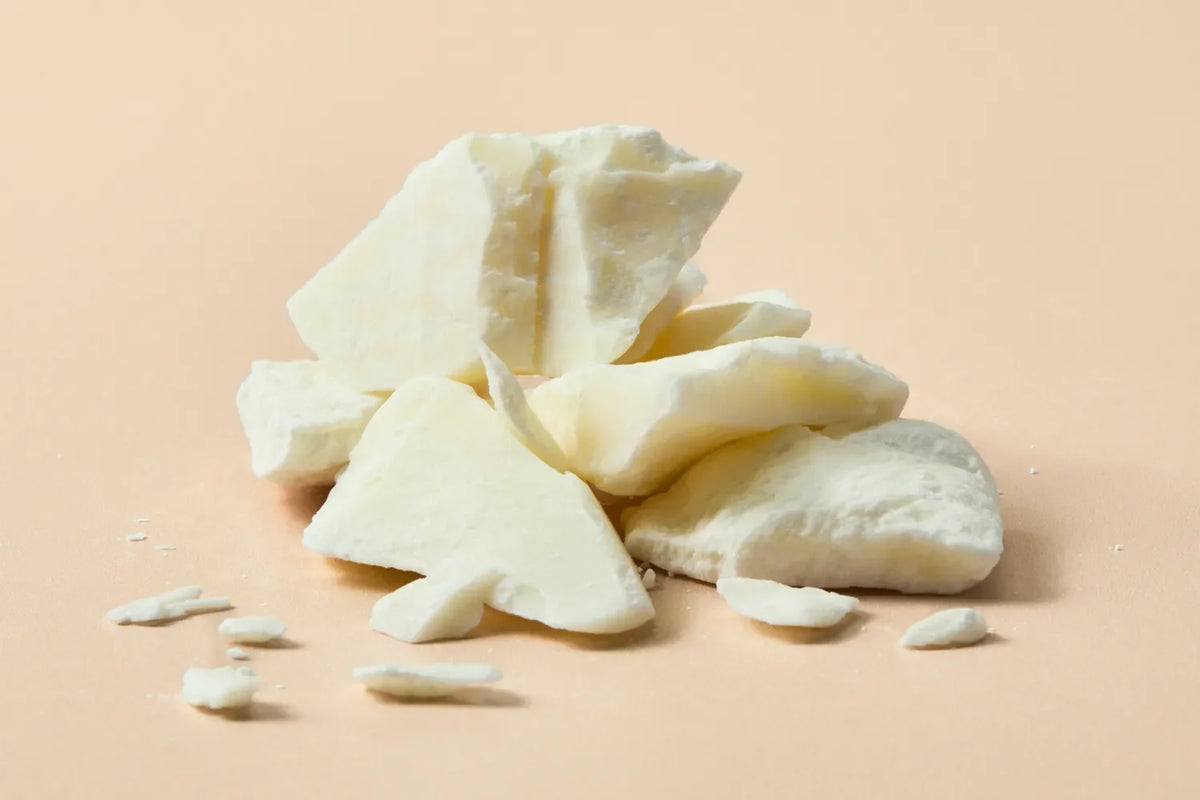
Cocoa butter is a hard, brittle butter with a fatty acid profile built for structure: roughly 35% stearic acid, 30% oleic acid, and 25% to 30% palmitic acid. That composition makes it occlusive on skin and firm in a bar. It hardens cold process soap quickly, holds its shape well, and resists softening in warm, humid conditions.
That same hardness is why cocoa butter works best in moderation. Most recipes cap it around 15% of total oils. Push past that percentage and a bar can turn brittle and crack during unmolding or cutting. For makers selling finished bars, that cap matters. A cracked bar is a bar you can’t sell.
Refined cocoa butter carries little to no chocolate scent and blends cleanly into any fragrance profile, which makes it the more predictable choice for a production recipe. Unrefined, or raw, cocoa butter keeps a natural cocoa aroma, worth factoring in if a recipe pairs it with a lighter fragrance oil.
Shea Butter in Soap
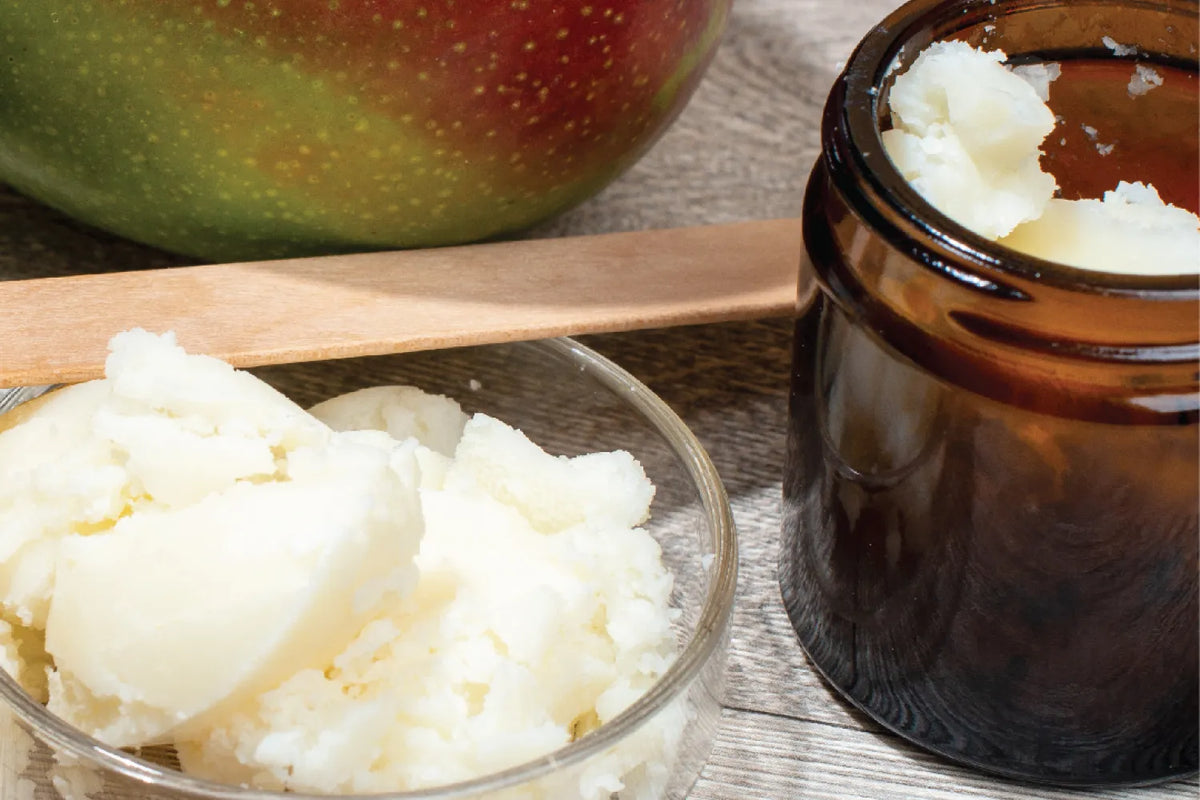
Shea butter plays a different role. It is roughly 85% to 90% fatty acids, along with vitamin A and vitamin E, and it contributes conditioning and creaminess rather than hardness. Where cocoa butter firms a bar, shea butter softens the feel on skin without weighing down lather.
Many recipes run shea butter at 15% to 30% of total oils, and some go higher, without the cracking risk that comes with cocoa butter. It is a dependable choice when the goal is a creamy, moisturizing bar that still holds together in daily use.
Refined shea butter is scent-free and consistent from batch to batch, a straightforward choice when a recipe's fragrance needs to lead. Unrefined shea keeps a faint, nutty scent and a slightly softer texture, both worth testing on a small batch before a full production run. Learn more about shea butter in soap.
Cocoa Butter vs Shea Butter: Side by Side
Neither butter is a major lather contributor. Both function as conditioning and hardening agents rather than bubble generators, so lather in a recipe built around either butter comes primarily from the other oils in the formula, coconut oil and castor oil among them.
Cocoa butter and shea butter also carry different saponification values, which changes how much lye a recipe needs when you swap one for the other or adjust the ratio. Run any recipe update through the Soap & Lye Calculator before you batch, so the lye amount matches the oils you are actually using.
Can You Use Both Together?
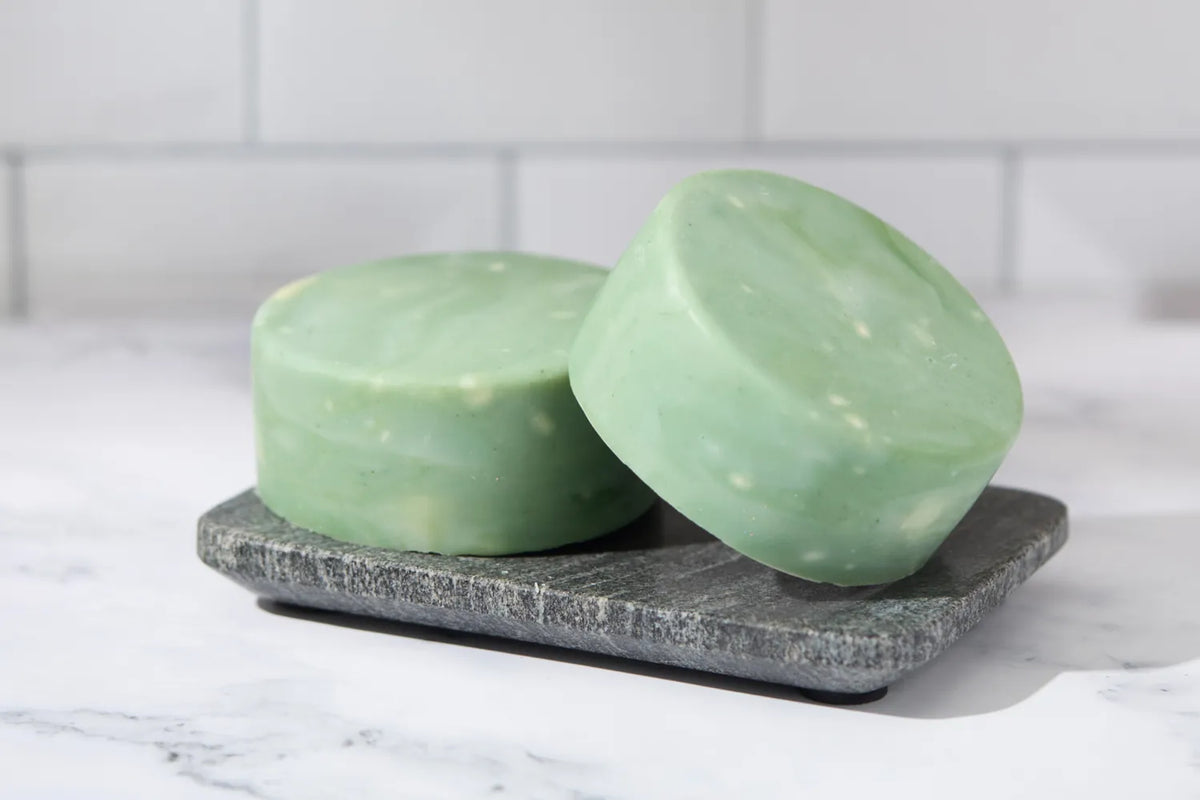
Yes, and many established recipes do exactly that. Cocoa butter supplies hardness. Shea butter supplies conditioning. Combined, at roughly 10% cocoa butter and 10% to 15% shea butter, the two produce a bar that holds its shape, lasts through regular use, and still feels creamy on skin.
Balancing the two is a formulation decision, not a guessing game. Melt both butters fully before adding them to the oil phase, so they blend smoothly at trace instead of leaving specks of unmelted fat. If a recipe already runs a superfat of 5% or higher, keep the combined cocoa and shea total under about 25% of oils, so the bar reaches a full cure without staying soft.
For a full breakdown of how these butters compare to other oils in a recipe, see Best Oils & Butters for Soap Making and the Soap Oil & Butter Properties Chart.
Why the Butter You Choose Affects Your Bottom Line
For makers selling finished soap, an ingredient choice is also a margin decision. Cocoa butter costs more per pound than most liquid oils, so most formulas use it as a supporting ingredient rather than a base. The 15% cap keeps both texture and cost in check. Shea butter's wider usable range gives more flexibility on cost per bar, particularly in a recipe built around a conditioning claim.
Consistency matters as much as cost. A repeatable recipe, using the same grade and source of butter every batch, is what keeps hardness, scent throw, and cure time predictable from one production run to the next. That predictability is what lets a small production line scale without reformulating every time a shipment arrives.
Storage plays into that same bottom line. Both butters hold their fatty acid profile well when kept in a cool, dry space away from direct light, and a properly stored batch will outlast most production schedules. That stability is part of why buying both butters in bulk lowers cost per bar without adding spoilage risk.
Offering both a cocoa-forward bar and a shea-forward bar also gives a product line two distinct positions to sell, without carrying two unrelated ingredient lists. One bar can be marketed as long-lasting and travel-ready, built on cocoa butter's hardness. The other can be marketed as a rich, conditioning option for sensitive skin, built on shea butter's higher usable percentage. Both draw from the same core ingredients, at different ratios.
FAQ
Is cocoa butter or shea butter better for soap?
Neither wins outright as they solve different problems. Cocoa butter adds hardness and a long-lasting bar. Shea butter adds conditioning and a creamy feel.
How much cocoa butter can you use in soap?
Most recipes cap cocoa butter at around 15% of total oils. Beyond that, bars can turn brittle and crack during unmolding or cutting. Staying within that range keeps the hardness benefit without the durability risk, which matters for bars headed to a shelf or a customer's hands.
Does cocoa butter make soap harder?
Yes. Cocoa butter's fatty acid profile, high in stearic and palmitic acid, firms a bar quickly and helps it hold its shape through cure and regular use. That hardness is one reason makers reach for cocoa butter in bars meant to last, especially in warm climates.
Can you use cocoa butter and shea butter together?
Yes. A blend of roughly 10% cocoa butter and 10% to 15% shea butter is a common starting point. Cocoa butter supplies structure, shea butter supplies conditioning, and together they produce a bar that holds up and feels good on skin.
Shop Cocoa Butter and Shea Butter
Both butters are proven building blocks, and stocking both gives you the range to build a firm bar, a conditioning bar, or a blend of the two. Shop cocoa butter and shea butter, or browse the full butters category for more options built for cold process and melt and pour soap making.